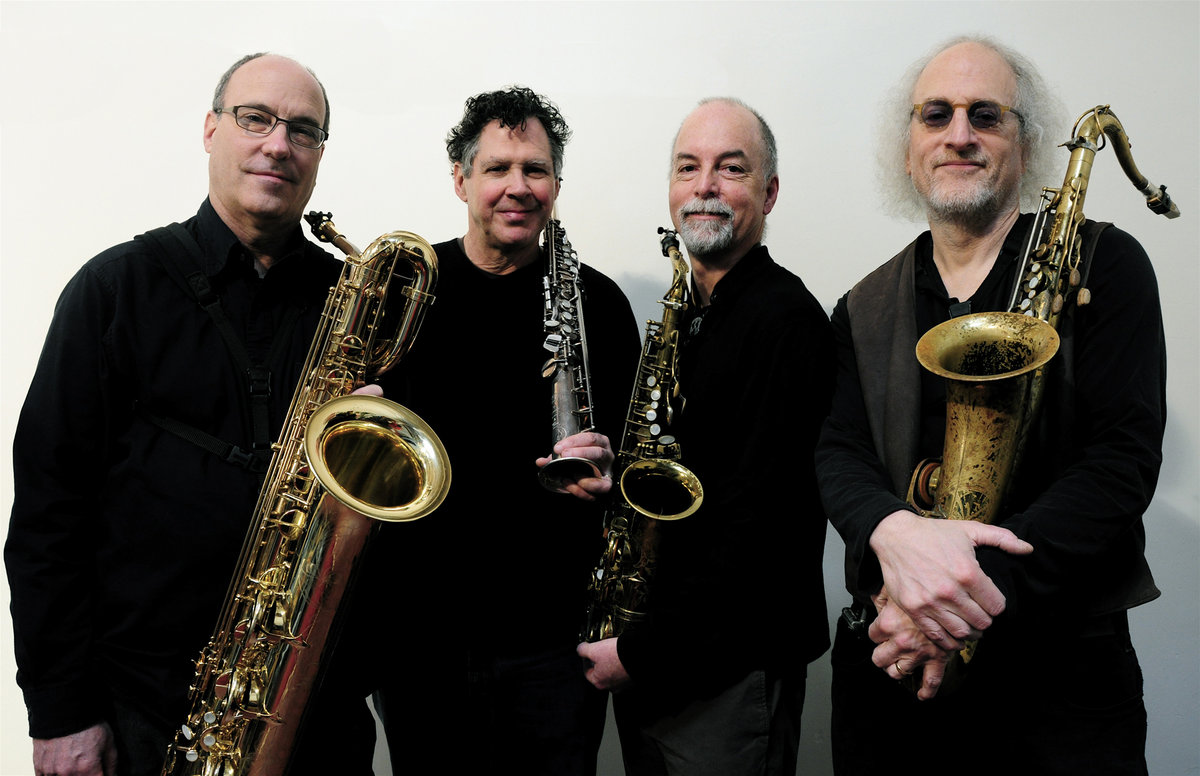
There were many unconventional instrumental combinations possible because of the experimental jazz zeitgeist in the 1960s and 70s. The basic horn-piano-bass-drums lineup of the modern jazz era lost its mandate, as more musicians searched for fresh and unusual sonorities. Ornette Coleman’s bands got rid of the piano, while Cecil Taylor’s trio featuring Jimmy Lyons and Sunny Murray took away the bass. The Chicago-based AACM sometimes removed one or more elements of the rhythm section. For example, the Art Ensemble of Chicago didn’t have a drummer in its first incarnation. Perhaps it was inevitable that ensembles made up of similar instruments would appear. The all-saxophone ensemble became popular with the introduction of the World Saxophone Quartet, in the late 1970s. The WSQ was almost exactly the same time that the Rova Saxophone Quartet, based in San Francisco, was founded. Although it didn’t reach the same level of fame as the WSQ, Rova was the second most popular and most adventurous ensemble of its type. Rova was established by Jon Raskin and Larry Ochs as well as Andrew Voigt and Bruce Ackley in October 1977. In February 1977, the first Rova concert was held at Mills College in Oakland. Rova was unique from the start. Although Rova was a jazz-based group, its members were also open to the possibility of creating their own music. In 1978, the group recorded Cinema Rovate for Ochs’ Metalanguage record. The band has released over two dozen albums on various labels, including Black Saint, New Albion and Sound Aspects. The band has performed around the globe. It was the first American new music group to tour the Soviet Union in 1983. A film documenting the experience was later aired by PBS. The Ganelin Trio, a Soviet-style jazz ensemble, was invited to perform at Rova’s Pre-Echoes series. In later years, the series would include Terry Riley, Braxton, John Zorn and Braxton. Voigt left Rova to be replaced in 1988 by Steve Adams. Rova is a registered non-profit entity that has existed since 1985. This allows it to commission new work and promote new music. Rova’s music incorporates many contemporary techniques such as serialism, cue card-based games pieces, rock, and free improvisation. Their music avoids cliches. Text contributed by users is available under Creative Commons By–SA License. It may also be available under GNU FDL.